Instant Download
Your unique download link appears right after you complete your purchase, and is also sent instantly to the email address you provided.
Couldn't load pickup availability

Your unique download link appears right after you complete your purchase, and is also sent instantly to the email address you provided.
Yes
Internal-Medicine-Primary-Care
primary care physicians, endocrinologists, internists, family physicians, hospital medicine physicians
Mixed (Video + PDF)
Mixed (Video + PDF)
Other
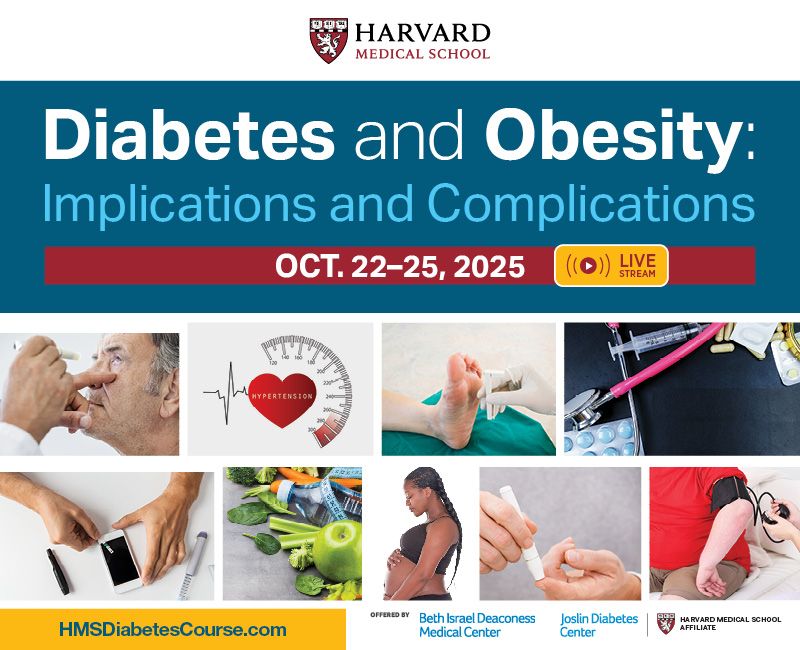
Updates, Guidance, and Best Practices for Patients with Diabetes
For those of you who provide care to individuals with—or at risk for—diabetes, managing the complex interplay of comorbidities and complications can be challenging. Obesity, a major contributor to the development and progression of diabetes and many of its comorbidities, plays a critical role in patient outcomes and requires targeted strategies for effective management.
Screening for diabetes and diagnostic criteria for obesity and diabetes
Clinical approaches to weight management, including lifestyle interventions, pharmacotherapy, and surgery
Pharmacological management of diabetes, including the latest in insulin and non-insulin therapies and their impact on weight management
Advances in insulin delivery and glucose monitoring technologies
Obesity as a comorbidity and its impact on diabetes progression, cardiovascular health, morbidity, and mortality
Treatment of diabetes-related complications, including dyslipidemia, hypertension, peripheral vascular disease, cardiovascular disease, kidney disease, liver disease, and the diabetic foot
Care considerations for older adults with diabetes and/or obesity
Challenging patient cases and real-world applications
Education to Optimize Patient Care and Outcomes
Insulin initiation and intensification: which insulins to choose and why
Understanding the new insulins, glucose monitors, and pumps
Treating people with type 2 diabetes who are not achieving therapeutic goals
Office-based assessment and treatment of comorbidities and complications
Individualizing multifaceted approaches to lifestyle modification and weight management
Personalizing nutrition plans and exercise prescriptions
Cardiovascular risk reduction and care
Pharmacotherapy for diabetes and obesity: GLP-1 receptor agonists and the spectrum of other options now available
Optimal management of neuropathies and foot disease
Managing diabetes in high-risk populations, including pregnant patients and the elderly
Understanding the evolving concepts and treatments that will soon impact your day-to-day practice
Communicating with, motivating, and sharing resources with patients
Learning Objectives
Describe the pathophysiology of type 1 and type 2 diabetes, how it is related to the development/progression of key diabetes comorbidities, and how knowledge of pathophysiology drives prevention and treatment.
Identify ways to improve skills and office-based care systems to optimize lifestyle interventions in the treatment of diabetes, obesity, and related conditions.
Describe the implications and impact of the latest evidence-based expert treatment guidelines for lifestyle, pharmacologic, and technologic treatments of diabetes and its comorbidities.
Recognize how the evolving clinical implications of cardiovascular and renal outcomes trials of antidiabetes medications can be effectively applied to the prevention, diagnosis, and treatment of these comorbidities of diabetes.
Apply the latest preventive, diagnostic, and treatment approaches to the care of the various disease and treatment-related comorbidities of diabetes impacting eyes, nerves, peripheral vascular and foot, liver, bone, and issues with hypoglycemia, and in special populations of people with diabetes such as the elderly, pregnant women, and hospitalized individuals.
Identify and overcome clinical practice barriers emanating from patients, providers, and practice systems issues.
Communicate with people with diabetes, families, and health team members in a responsive manner that supports a team approach to the promotion and maintenance of health, as well as prevention and treatment of disease in individuals with diabetes.
Who Should Attend
Endocrinology
Internal Medicine
Family Medicine
Hospital Medicine
Geriatrics
Cardiology
Nephrology
Diabetes Educators
Dietitians
Other healthcare professionals who care for patients with diabetes or treat their comorbidities and complications.
Schedule.pdf