Instant Download
Your unique download link appears right after you complete your purchase, and is also sent instantly to the email address you provided.
Couldn't load pickup availability

Your unique download link appears right after you complete your purchase, and is also sent instantly to the email address you provided.
Yes
Oncology-Hematology
oncologists, hematologists
Mixed (Video + PDF)
Mixed (Video + PDF)
Other
Specialties – Allergy and Immunology, Cardiology, Dermatology, Dermatopathology, Emergency Medicine, Endocrinology, Diabetes and Metabolism, Gastroenterology, Gastrointestinal Oncology, Genitourinary Oncology, Geriatric Medicine, Gynecologic Oncology, Immunotherapy, Integrative Medicine, Medical Oncology, Neurology, Neuro-Oncology, Nurse Practitioner, Rheumatology, Solid Tumor Oncology
Overview
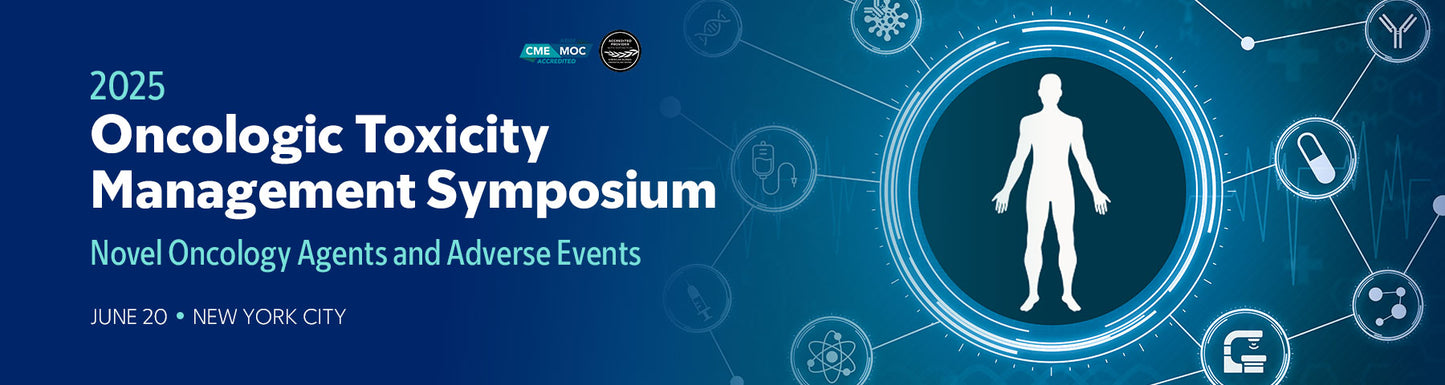
The 2025 Oncology Toxicity Management Symposium unites leading oncologists, researchers, and healthcare professionals to explore the latest breakthroughs in cancer treatment and toxicity management. With rapid advancements in oncology, this symposium serves as a critical platform for discussing emerging therapies, their clinical applications, and strategies to mitigate treatment-related adverse events, ultimately aiming to improve patient care and outcomes.
As oncology continues to evolve, new therapies are revolutionizing the landscape of cancer treatment. This symposium will provide a comprehensive, evidence-based approach to understanding next-generation treatments, their efficacy, and the challenges associated with their implementation in clinical practice.
Radioligand Therapy – A novel approach that delivers targeted radiation to cancer cells, offering precise treatment with minimal damage to surrounding tissues. The session will focus on clinical applications, effectiveness, and strategies to manage radiation-related toxicity.
Antibody Drug Conjugates (ADCs) – A breakthrough class of targeted cancer therapies designed to deliver highly potent chemotherapy directly to cancer cells. Experts will discuss the latest ADC developments, clinical benefits, and effective management of associated toxicities.
CAR-T Cell Therapy – A groundbreaking immunotherapy that harnesses the body’s own immune system to fight cancer. This session will address treatment protocols and management of adverse events such as cytokine release syndrome (CRS) and immune effector cell-associated neurotoxicity syndrome (ICANS).
Bispecific Antibodies – A cutting-edge approach that redirects T-cells to attack tumor cells. Attendees will gain an understanding of the potential of Bispecific Antibodies, their clinical applications, and how to mitigate immune-related toxicities.
Small Molecule Inhibitors (SMIs) – Targeted agents that block key pathways involved in cancer growth. This session will explore the role of SMIs in oncology, their therapeutic potential, and management of associated risks such as cardiovascular toxicity and metabolic disturbances.
Immune Checkpoint Inhibitors (ICIs) – A revolutionary class of immunotherapies that enhance the body’s natural ability to fight cancer. Experts will discuss how ICIs are reshaping oncology, the challenges of immune-related adverse events (irAEs), and best practices for toxicity management.
Through expert-led presentations, panel discussions, and interactive Q&A sessions, attendees will deepen their understanding of novel therapies transforming oncology care, learn strategies to manage treatment-related toxicities, engage with thought leaders on cutting-edge research and clinical trials, and connect with peers to foster innovation in cancer treatment.
Target Audience
This symposium is an essential event for oncologists, hematologists, researchers, nurse practitioners, physician assistants, pharmacists, and all healthcare professionals involved in cancer care. Attendees will leave with actionable knowledge and practical tools to optimize patient outcomes and stay at the forefront of oncology advancements.
Objectives
Describe the mechanism of action, indications, and clinical efficacy of Radioligand Therapy, Antibody Drug Conjugates (ADCs), Bispecific Antibodies, CAR-T Cell Therapy, Small Molecule Inhibitors (SMIs), and Immune Checkpoint Inhibitors (ICIs).
Develop evidence-based strategies to identify, prevent, and manage treatment-related toxicities, such as cytokine release syndrome (CRS), neurotoxicity, immune-related adverse events (irAEs), and organ-specific toxicities.
Recognize the early signs of adverse reactions and implement effective interventions to reduce complications and improve patient safety.
Apply clinical case studies and expert insights to make informed, patient-centered decisions in oncology treatment planning.
Discuss how to balance treatment efficacy with toxicity management to optimize long-term patient outcomes.
Friday, June 20, 2025