Instant Download
Your unique download link appears right after you complete your purchase, and is also sent instantly to the email address you provided.
Couldn't load pickup availability

Your unique download link appears right after you complete your purchase, and is also sent instantly to the email address you provided.
Yes
Internal-Medicine-Primary-Care
hepatologists, gastroenterologists, internists, transplant specialists
Mixed (Video + PDF)
Mixed (Video + PDF)
Other
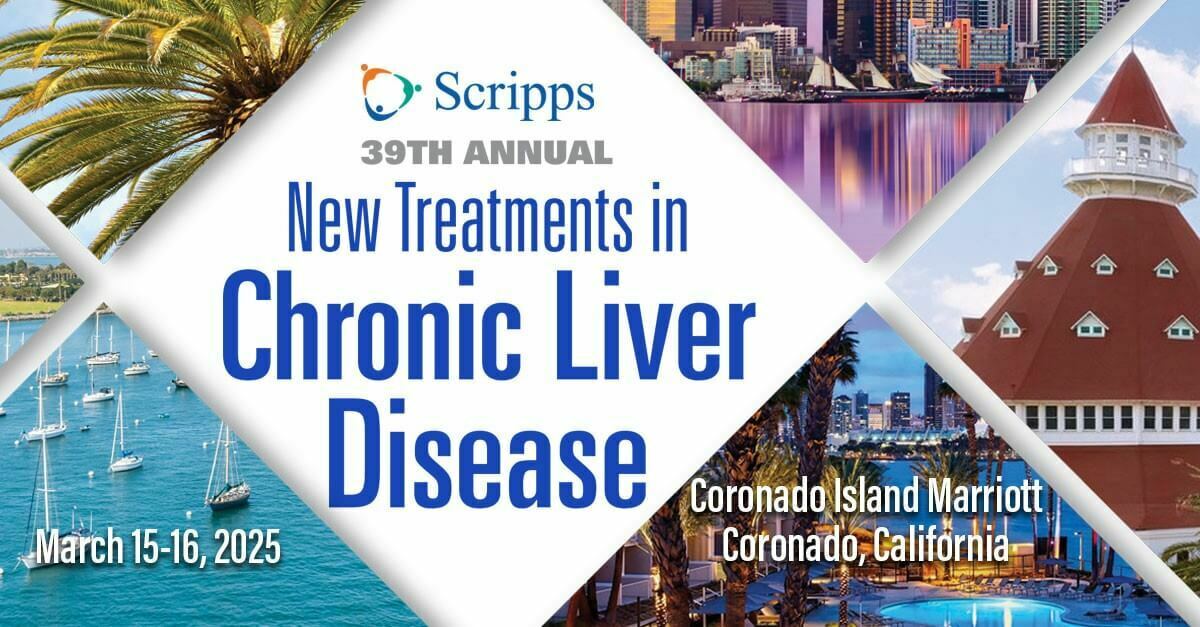
39TH ANNUAL New Treatments in Chronic Liver Disease
Educational Objectives
Cite new strategies for identifying and managing metabolic liver disease.
Discuss potential new treatments for alcohol related liver disease.
Summarize novel markers and therapies in PBC and PSC.
Evaluate liver masses and new therapeutic options for HCC.
Employ strategies for treating and managing ascites and hepatorenal syndrome.
The Scripps 39th Annual New Treatments in Chronic Liver Disease Conference (2025) is best for hepatologists, gastroenterologists, internists, transplant specialists, and allied health professionals who want CME‑accredited updates on the latest therapies, diagnostics, and management strategies for chronic liver disease.
Who Should Attend
Hepatologists and gastroenterologists managing patients with cirrhosis, hepatitis, NAFLD/NASH, and other chronic liver conditions.
Transplant hepatologists and surgeons involved in liver transplantation and advanced liver failure care.
Internal medicine and primary care physicians who need practical updates for managing liver disease in outpatient settings.
Residents, fellows, and trainees preparing for board exams or subspecialty practice in hepatology or GI.
Nurses, nurse practitioners, and physician assistants working in hepatology, gastroenterology, or transplant programs.
What You’ll Learn
Latest pharmacologic therapies for viral hepatitis, autoimmune hepatitis, NAFLD/NASH, and cholestatic liver diseases.
Advances in diagnostics: non‑invasive fibrosis assessment, imaging, and biomarkers.
Management of cirrhosis and portal hypertension including complications such as ascites, variceal bleeding, and hepatic encephalopathy.
Updates in liver transplantation: patient selection, immunosuppression, and outcomes.
Emerging therapies and clinical trials shaping the future of chronic liver disease treatment.
Saturday, March 15, 2025
7 a.m. Registration, Breakfast & View Exhibits
8 a.m. Welcome & Introduction Identifying And Managing Metabolic Liver Disease
8:15 a.m. Use of Surrogate Markers and Algorithms to Identify High Risk Patients and Optimize Outcomes
8:45 a.m. Lifestyle Recommendations in Clinical Practice
9:30 a.m. Incretins for Patients with MASH and T2D
10 a.m. Break & View Exhibits
10:30 a.m. Drug Development for MASH
11:15 a.m. Panel Discussion/Q&A
Noon Non-CME Lunch Symposium Hosted by Gilead Sciences Evolving Therapies For Advanced Liver Care
1 p.m. CAMs for HBV: How Do They Work and How Should We Use Them?
1:30 p.m. New Guidance for Hepatitis B and C
2 p.m. All Things Itchy: PBC, PSC, and Pruritus
2:30 p.m. Break & View Exhibits
2:45 p.m. Alcohol Hepatitis
3:15 p.m. Panel Discussion/Q&A
3:45 p.m. Adjourn
4 p.m. Welcome Reception
Sunday, March 16, 2025
7 a.m. Breakfast & View Exhibits
7:55 a.m. Welcome & Announcements ESLD, HCC And Transplantation
8 a.m. Refractory Hepatic Encephalopathy
8:30 a.m. Mock HCC Tumor Board
9:30 a.m. Systemic Therapies for HCC
10 a.m. Break & View Exhibits
10:30 a.m. WILLIAM S. HAUBRICH LECTURE: ASOs and siRNAs for HBV—How Do They Work and How Should We Use Them?
11:30 a.m. Panel Discussion/Q&A
Noon Final Adjournment